Choosing the top 10 mini drone suppliers requires more than comparing colorful product photos or low prices. Reliable suppliers should demonstrate manufacturing experience, stable quality control, clear technical specifications, and responsive customer support. Their product ranges may include lightweight camera drones, educational models, indoor flyers, and compact commercial tools. However, small size does not guarantee dependable performance.
This guide examines suppliers through practical criteria. These include flight stability, battery safety, camera quality, control range, spare-part availability, and documented testing. It also considers production capacity, customization services, delivery consistency, and after-sales support. A supplier with attractive pricing may still disappoint if replacement batteries are unavailable. A polished website is not enough.
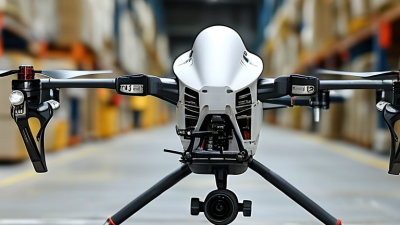
Real purchasing decisions often happen beside a warehouse shelf, where packaging quality and labeling become immediately visible. Certifications, user manuals, and transparent warranty terms deserve close attention. Buyers should also confirm that each mini drone follows the aviation and privacy requirements applicable in its operating region. Rules differ between countries and can change over time.
The ranking is not presented as an absolute verdict. Supplier performance may vary by model, order volume, and customer location. Some companies publish limited information, making independent verification difficult. That weakness matters. Therefore, the following overview combines supplier reputation, product evidence, technical capability, and buyer-focused practicality. It aims to help distributors, retailers, educators, and hobby users create a more informed shortlist before requesting samples or placing an order.
Mini Drone Suppliers: Definition, Scope, and Market Roles
Mini drone suppliers provide aircraft, flight controllers, cameras, batteries, software, or complete kits for compact unmanned systems. “Mini” lacks one global definition. Some reports classify units below 250 grams, while others use size, payload, or flight range. This difference matters. A palm-sized training drone serves a different buyer than a sub-250-gram inspection platform.
The supplier landscape includes original equipment manufacturers, component specialists, contract assemblers, distributors, and repair providers. For a credible top-ten comparison, buyers should examine production capacity, battery safety testing, spare-part availability, firmware support, and documented quality systems. The FAA Aerospace Forecast 2024–2044 projects the U.S. commercial drone fleet to grow from about 860,000 aircraft in 2023 to roughly 1.5 million by 2028. That growth expands demand beyond aircraft sales. Training, maintenance, data software, and replacement parts also become market roles.
Industry estimates remain inconsistent. Grand View Research reports continued double-digit expansion in the broader drone market, while Drone Industry Insights separates consumer, commercial, and government demand. Their categories do not align perfectly with mini drones. That is a weakness worth admitting. A supplier ranking based only on revenue may reward scale, not reliability. Field experience suggests that a smaller supplier with stable batteries and fast parts can outperform a larger catalog supplier. Buyers should test samples, verify published specifications, and request recent compliance records before committing to volume orders.
A supplier-profile comparison based on market role, product scope, technical capability, and distribution coverage
| Rank | Supplier Profile | Primary Market Role | Typical Mini-Drone Class | Typical Takeoff Mass | Typical Flight Time | Common Payload | Main Sales Channel | Key Buying Criteria |
|---|---|---|---|---|---|---|---|---|
| 1 | Integrated Consumer-Aircraft Supplier | Designs and supplies complete ready-to-fly systems for photography, recreation, and education. | Foldable camera mini drone | Below 250 g | 20–35 minutes | Stabilized camera; no external payload | Direct online and specialist retail | Image quality, obstacle sensing, portability, software support |
| 2 | OEM and ODM Mini-Drone Manufacturer | Builds customized airframes, electronics, packaging, and firmware for private-label buyers. | Micro and mini quadcopter | 50–500 g | 8–25 minutes | Basic camera, protective cage, or training module | Business-to-business sourcing platforms and contract sales | Minimum order quantity, customization, tooling, quality control |
| 3 | Commercial Inspection Supplier | Provides compact platforms for indoor inspection, construction documentation, and asset monitoring. | Enterprise-ready mini drone | 250 g–2 kg | 20–40 minutes | High-resolution camera, thermal sensor, or LED lighting | Value-added resellers and enterprise integrators | Reliability, data security, service contracts, indoor positioning |
| 4 | Public-Safety Drone Supplier | Supports emergency response, search operations, situational awareness, and training programs. | Ruggedized mini drone | 250 g–1.5 kg | 20–35 minutes | Low-light camera, thermal camera, or loudspeaker | Government tenders and authorized integrators | Ruggedness, encrypted links, rapid deployment, regulatory compliance |
| 5 | Educational and STEM Drone Supplier | Supplies classroom kits for coding, robotics, flight control, and engineering instruction. | Programmable micro drone | Below 250 g | 5–15 minutes | Optical-flow sensor, distance sensor, or small camera | Schools, distributors, and education tenders | Safety guards, replaceable parts, curriculum support, coding compatibility |
| 6 | Racing and FPV Component Supplier | Provides high-agility aircraft, replacement parts, video systems, and assembly components. | FPV micro or mini quadcopter | Below 500 g | 4–12 minutes | FPV camera, video transmitter, and high-discharge battery | Specialist hobby retailers and online communities | Acceleration, latency, repairability, component availability |
| 7 | Agricultural Monitoring Supplier | Supplies compact aerial systems for crop scouting, field mapping, and early anomaly detection. | Mapping and scouting mini drone | 500 g–4 kg | 25–50 minutes | RGB, multispectral, or compact thermal sensor | Agricultural dealers and solution integrators | Georeferencing accuracy, weather resistance, analytics workflow |
| 8 | Surveying and Mapping Supplier | Delivers compact aerial mapping packages for small sites, facilities, and infrastructure surveys. | Photogrammetry mini drone | 500 g–2 kg | 25–45 minutes | High-resolution RGB camera or compact LiDAR payload | Professional dealers and surveying firms | Positioning accuracy, image overlap, processing compatibility |
| 9 | Indoor Logistics and Inventory Supplier | Develops compact autonomous systems for warehouse scanning, stock checks, and indoor navigation. | Indoor autonomous mini drone | 500 g–3 kg | 15–30 minutes | Barcode, RFID, visual, or depth-sensing module | System integrators and enterprise contracts | Autonomous navigation, fleet management, safety, integration APIs |
| 10 | Drone Parts and Service Distributor | Distributes batteries, motors, propellers, controllers, cameras, repair kits, and technical support. | Parts-compatible mini drones | Below 2 kg | Product-dependent | Replacement components and modular accessories | Regional distribution and after-sales service | Stock availability, compatibility, delivery speed, repair capability |
What Are the Top 10 Mini Drone Suppliers?
Choosing among the top 10 mini drone suppliers requires more than comparing camera resolution. Grand View Research projects the commercial drone market to grow at a 13.9% CAGR from 2023 to 2030. However, market definitions differ, so buyers should verify every figure. The FAA reported more than 850,000 drones registered in the United States in 2023. That growth increases the need for dependable suppliers, not merely attractive product pages.
Evaluate flight time under real payload conditions. A stated 30-minute flight may fall below 20 minutes outdoors. Check battery cycle data, charging controls, spare-part availability, and repair turnaround. Suppliers should provide documented testing, firmware update policies, and clear data-handling procedures. Independent inspection records are valuable evidence. Request sample units before committing to volume orders. In field evaluations, small issues often matter: loose propeller guards, weak cases, or delayed technical replies. No scorecard is perfect. Still, a weighted comparison reduces costly assumptions.
Tips: Ask for three recent customer references. Compare warranty terms line by line. Test performance in wind, low light, and crowded storage rooms. Review the supplier’s quality certificates, delivery history, and failure-rate reports. A lower purchase price can hide replacement costs. Also, avoid accepting “professional grade” without measurable specifications. A supplier that admits limitations may be more reliable than one promising everything.
Key Criteria for Evaluating Mini Drone Suppliers
This procurement benchmark assigns a total weight of 100% across ten practical supplier-evaluation criteria. Product quality, flight performance, regulatory compliance, and production capability receive the highest emphasis because they directly affect safety, reliability, and delivery continuity. The percentages are evaluation weights rather than company rankings.
The strongest mini drone suppliers differ in practical ways. Some focus on stable flight, while others prioritize compact design and simple controls. The best candidates usually provide reliable motors, balanced frames, and batteries with clear safety documentation. These details matter during repeated indoor testing.
Ten core strengths often separate leading suppliers. They include camera integration, obstacle sensing, quiet operation, beginner-friendly software, and durable propeller guards. Other valuable capabilities include OEM customization, educational kits, repair support, compliance records, and dependable wholesale logistics. Suppliers with strong quality control can keep performance consistent across large orders. That consistency is often more valuable than a lower unit price.
Ask for sample units before approving production. Test hovering, landing accuracy, charging time, and controller response. Examine packaging too. A damaged box can reveal weak logistics practices. Supplier claims still require verification through manuals, inspection reports, and clear warranty terms. Some companies provide impressive specifications but limited after-sales support. That is a weakness worth noting. I would also compare replacement-part availability, because small drones can suffer minor damage during ordinary training. No supplier performs perfectly in every category. A careful buyer should record these trade-offs rather than trust polished sales language.
What Are the Top 10 Mini Drone Suppliers?
A credible top-ten shortlist should compare capabilities, not only catalog size. Product categories usually include entry-level indoor models, camera drones, educational kits, and compact inspection platforms. Drone Industry Insights’ 2024 market analysis identifies commercial growth, while Statista reports continued consumer interest in lightweight aerial devices. These figures support demand, but they do not prove supplier reliability.
Technology separates serious suppliers from simple assemblers. Look for optical-flow positioning, stable 1080p or 4K imaging, obstacle sensing, brushless motors, replaceable propeller guards, and efficient battery management. Small details matter. A loose battery connector can stop a classroom demonstration. Supply capability requires more evidence: documented quality inspections, transparent minimum order quantities, spare-part availability, firmware support, and repeatable delivery schedules. The International Trade Administration highlights compliance and supply-chain traceability as important factors in electronics sourcing. Ask for factory audit records and recent production samples. Do not trust polished specifications alone.
The strongest suppliers can support OEM and ODM customization without weakening testing standards. They should provide packaging options, user manuals, multilingual support, and clear after-sales procedures. MarketsandMarkets’ drone industry research also points to expanding demand for autonomous features and compact systems. Yet autonomy claims deserve careful checking. Battery life is often measured indoors, without wind or recording. That is where many comparisons become imperfect. A practical review should test flight time, control range, camera stability, charging cycles, and failure rates under identical conditions. Supplier rankings change quickly. Procurement teams should recheck data every quarter.
Selecting the right mini drone supplier requires more than comparing online prices. Grand View Research valued the global consumer drone market at about $4.3 billion in 2023. It also projects a 13.9% annual growth rate from 2024 to 2030. This growth increases supplier choice, but quality varies widely. Examine flight stability, camera performance, battery availability, and repair support. Ask for verified testing records, not attractive product claims. A reliable supplier should provide clear specifications, serial tracking, and realistic delivery times.
Experience matters during supplier evaluation. Request samples from several factories before placing a large order. Test a drone indoors, outdoors, and in light wind. Check whether the controller loses connection behind a wall. Measure actual flight time, because advertised figures often use ideal conditions. The Federal Aviation Administration reports hundreds of thousands of registered drones in the United States, showing why responsible operation and documentation deserve attention. Suppliers should explain regional requirements, product labeling, and safety instructions clearly.
Tips: Compare warranty length, replacement-part access, packaging strength, and response time. Request a written quality-control checklist. Use independent inspection for larger orders. Avoid suppliers that refuse sample testing or hide battery details. I would also score communication quality, though this judgment can feel subjective. A low price may still become expensive after returns, delays, and damaged units.