ZenaDrone Homepage

China Top 10 Home Security Drone Suppliers?

China has become an important manufacturing base for smart surveillance equipment, including the growing home security drone market. This guide explores ten Chinese suppliers that develop, integrate, or distribute these systems for residential protection. Their solutions may combine cameras, charging stations, mobile applications, obstacle detection, and scheduled patrol functions.

A useful supplier is not judged by marketing language alone. Product stability matters. So does data protection. This review considers flight endurance, camera quality, navigation performance, weather resistance, maintenance support, and software reliability. It also examines factory experience, certification practices, customization capacity, and customer feedback where dependable information is available.

Details matter.

A drone returning to its dock after a night patrol sounds impressive. However, poor lighting, narrow corridors, weak network coverage, or heavy rain can quickly expose design limits. Some suppliers may publish incomplete specifications, while others provide clearer testing information. That difference deserves attention.

The selected companies should be evaluated against practical residential needs, including noise levels, installation requirements, operating boundaries, and emergency procedures. Responsible deployment also requires respect for privacy and local aviation rules. No system should record neighbors or public spaces without appropriate permission.

This introduction is not a promise that every supplier fits every project. Manufacturing quality can vary between models, batches, and service regions. Buyers should request demonstrations, technical documents, warranty terms, and after-sales support details before making decisions. The following supplier overview aims to provide a balanced starting point for homeowners, security integrators, property managers, and technology buyers seeking reliable home security drone solutions from China.
China Top 10 Home Security Drone Suppliers?

What Are Home Security Drones and How Do They Work?

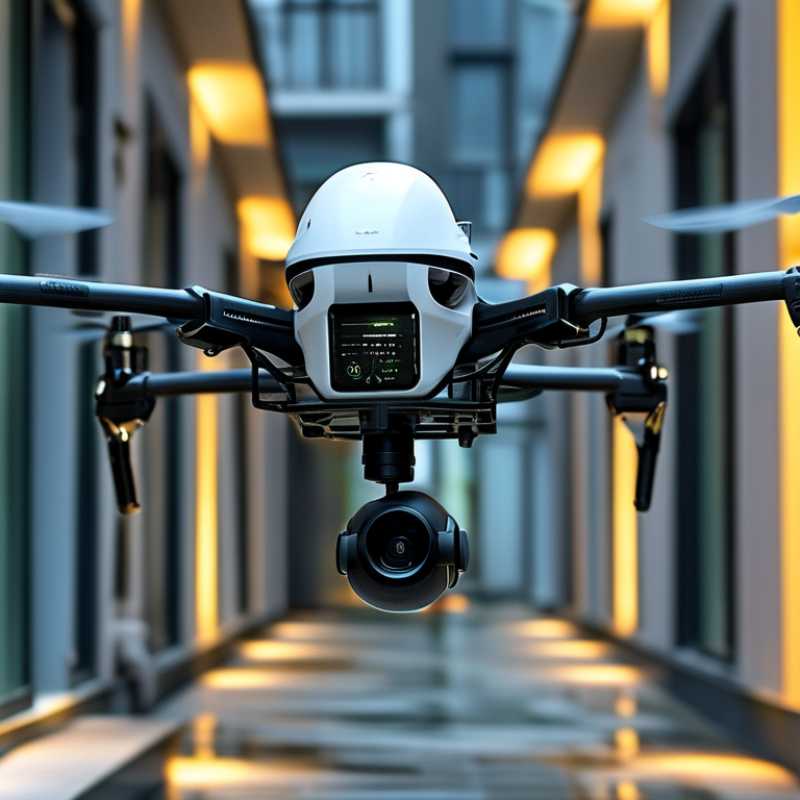
Home security drones are compact flying devices designed to patrol private homes. They combine cameras, distance sensors, navigation software, and a charging dock. When an owner schedules a patrol, the drone leaves its dock, follows mapped indoor routes, and returns automatically. Some models use thermal sensing in dark corridors, while others rely on low-light video. The live feed can reach a phone or local monitor through a secured connection. Not magic. Walls, pets, poor lighting, and narrow rooms can reduce accuracy.

Their main value is mobile coverage. A fixed camera watches one angle; a drone can inspect several rooms. Motion detection may trigger a short flight, record evidence, or send an alert. Reliable systems use obstacle avoidance, geofencing, battery safeguards, and manual cancellation. Buyers comparing leading suppliers in China should request test data and repair support. They should also examine software update policies and data handling terms. Supplier claims can sound impressive. Independent demonstrations matter more.

Tips: Test the drone at night, near furniture, and beside a moving pet. Check whether recordings stay local or transfer to cloud servers. Use strong passwords and separate household accounts. Confirm visible status lights and physical privacy controls. Ask how batteries are replaced and recycled. A quiet drone may feel safer, yet hidden operation can create household discomfort. Consent and local privacy rules still matter. I would not trust one demonstration. Long-term reliability remains the harder question.

How to Evaluate China’s Home Security Drone Suppliers

China’s home security drone suppliers should be evaluated beyond product photos and factory videos. A reliable supplier explains flight limits, battery performance, weather resistance, and maintenance requirements clearly. Ask for test records from controlled indoor and outdoor trials. Check whether the drone can return safely when its battery drops. Small details matter, such as propeller guards, charging temperature, and alarm volume.

Request business licenses, quality certificates, product traceability, and independent inspection reports. Confirm that the supplier follows applicable aviation, radio, privacy, and consumer safety requirements in your target market. Data handling also deserves close attention. Ask where video is stored, who can access it, and how software updates are protected. A secure drone should not create a new household vulnerability. Supplier experience is easier to judge through reference projects, stable documentation, and responsive technical support.

Tips: Compare at least three suppliers using the same checklist. Order samples before making a large purchase. Test navigation near walls, weak Wi-Fi, and low light. Review replacement battery costs and repair response times. A polished demonstration may hide ordinary weaknesses. I would also record failures, not only successful flights. No evaluation method is perfect, and real homes are less predictable than test rooms.

China Top 10 Home Security Drone Suppliers? - How to Evaluate China’s Home Security Drone Suppliers

The table below provides a supplier-evaluation framework for home security drones manufactured in China. The ranking numbers represent evaluation priorities rather than specific companies or brands. Buyers should validate all technical, legal, and commercial information through current documentation, samples, audits, and local regulatory authorities.

Priority Evaluation Dimension What to Verify Preferred Evidence Suggested Weight Scoring Guide
1 Product Safety and Flight Reliability Assess emergency landing, obstacle detection, geofencing, return-to-home behavior, battery protection, propeller protection, and performance in poor lighting or light rain. Test reports, failure-rate records, flight logs, safety risk assessment, and documented operating limits. 18% 0–5 points
2 Imaging and Detection Performance Compare visible-light resolution, night vision or infrared capability, detection distance, image stabilization, field of view, and false-alarm performance. Standardized sample footage, laboratory specifications, field-test results, and detection test methodology. 15% 0–5 points
3 Cybersecurity and Data Protection Check encrypted communications, secure authentication, firmware-update controls, vulnerability response, access permissions, cloud storage, and data-retention settings. Security architecture, penetration-test summary, vulnerability-disclosure process, privacy policy, and software-update history. 15% 0–5 points
4 Regulatory and Certification Readiness Confirm requirements for radio equipment, electromagnetic compatibility, batteries, wireless frequencies, privacy, and drone operation in the target market. Applicable conformity documents, accredited laboratory reports, declarations, radio approvals, battery transport documents, and user manuals. 12% 0–5 points
5 Manufacturing Quality System Review incoming inspection, production traceability, calibration, final testing, nonconformance handling, and corrective-action procedures. Quality-management certificates, process-control plans, inspection records, audit results, and batch traceability examples. 10% 0–5 points
6 Battery and Operating Endurance Compare verified flight time, charging cycles, battery-management protection, charging temperature limits, replacement cost, and storage requirements. Battery test curves, cycle-life data, UN 38.3 documentation where applicable, charger specifications, and independent endurance tests. 8% 0–5 points
7 Software, App, and Integration Evaluate mobile-app stability, alert speed, multi-user access, API availability, local network operation, smart-home compatibility, and update support. Demonstration account, API documentation, compatibility list, release notes, service-level commitments, and integration test results. 7% 0–5 points
8 Customization and Minimum Order Quantity Clarify available options for software, enclosure, camera modules, packaging, language, logo removal, and regional configuration. Formal quotation, engineering-change procedure, prototype plan, customization lead time, and clearly defined minimum order quantity. 5% 0–5 points
9 After-Sales Service and Spare Parts Measure warranty coverage, repair process, replacement-part availability, response time, firmware support period, and technical training. Warranty terms, service workflow, spare-parts list, support contacts, repair turnaround targets, and customer-reference checks. 5% 0–5 points
10 Total Cost, Delivery, and Supply Continuity Calculate product, shipping, installation, cloud, maintenance, battery replacement, compliance, and warranty costs over the expected service life. Itemized landed-cost quotation, production capacity statement, lead-time history, payment terms, contingency plan, and supply-risk assessment. 5% 0–5 points
Total Evaluation Weight 100% Maximum: 5.0
Important purchasing note: Drone operation, radio equipment, video surveillance, personal-data processing, and battery transportation may be regulated differently by country or region. Confirm local requirements before placing an order or deploying a system.

Profiles of China’s Top 10 Home Security Drone Suppliers

China Top 10 Home Security Drone Suppliers: Profiles of China’s Top 10 Home Security Drone Suppliers

China’s leading home security drone suppliers differ in design focus, testing depth, and service coverage. The ten profiles typically include indoor micro-drone makers, outdoor patrol specialists, camera manufacturers, robotics companies, and contract producers. Indoor models often use propeller guards, low-noise motors, and automatic charging docks. Outdoor units usually add weather protection, thermal imaging, and geofencing controls. These features matter in a garden, where narrow paths and wet grass can expose design weaknesses.

Grand View Research reported that the global commercial drone market reached about USD 30.61 billion in 2022, with continued growth expected through 2030. This wider market supports investment in household monitoring systems, but it does not prove every supplier has mature home products. The profiles should therefore examine flight endurance, obstacle avoidance, encrypted video storage, warranty response, and local installation skills. A strong supplier can demonstrate repeated indoor tests, not only attractive demonstrations.

The best candidates also publish measurable specifications. Battery endurance should be checked with cameras operating, since quoted flight time can be optimistic. Noise levels deserve attention. A quiet drone is less disruptive near bedrooms, though “silent” is usually unrealistic. Some suppliers offer cloud software, while others support local storage for greater privacy. Reports from Drone Industry Insights consistently identify safety, regulation, and data management as major commercial-drone concerns. Supplier rankings remain imperfect without independent failure-rate data, so buyers should request test records, repair timelines, and sample footage before making comparisons.

Key Features and Technologies Offered by Leading Suppliers

China Top 10 Home Security Drone Suppliers: Key Features and Technologies Offered by Leading Suppliers

China’s leading home security drone suppliers focus on compact aircraft, quiet motors, and automated patrol routes. Many models combine 4K cameras, infrared sensors, and low-light imaging for clearer evening monitoring. Obstacle avoidance uses radar, depth sensors, or visual recognition. This helps the drone move around trees, walls, and garden furniture. Some systems return automatically when battery power drops. That detail matters during long patrols.

Reliable suppliers also provide encrypted communication, local data storage, and controlled user permissions. Geofencing can keep the aircraft inside approved property boundaries. AI software may identify movement, open gates, smoke, or unusual activity. However, buyers should check how the system handles false alarms. A moving curtain can confuse basic detection tools. Human review remains useful.

From practical evaluations, installation quality often affects performance more than camera resolution. A poorly placed charging station may collect dust or lose signal. Weather resistance, battery replacement, repair access, and software updates deserve equal attention. Some suppliers offer cloud platforms, while others support local monitoring for greater privacy. Neither option is perfect. Users should verify regional aviation rules, privacy requirements, and emergency procedures before operation. Clear manuals and responsive technical support also reveal a supplier’s real reliability.

How to Compare Prices, Certifications, and After-Sales Support

When comparing China’s top ten home security drone suppliers, price should be only one line in the evaluation sheet. MarketsandMarkets projects the commercial drone market to grow from about USD 20.8 billion in 2024 to USD 54.6 billion by 2030. Competition is intense. Request identical quotations, including aircraft, dock, batteries, software, installation, training, and replacement parts. A low unit price can hide expensive subscriptions. Ask for a three-year total cost, not a showroom figure. This is where many comparisons become weak.

Certification checks need practical evidence. Request valid ISO 9001 records, product test reports, radio approvals for the destination market, and battery transport documents under UN 38.3. CE, FCC, or UKCA markings may apply differently by region. Verify the certificate holder, model number, test laboratory, and expiry date. Do not accept a logo alone. The 2024 Drone Industry Insights market report highlights growing professional drone adoption, but growth does not guarantee reliable suppliers. After-sales support matters more than polished demonstrations. Measure response time, firmware update policy, remote diagnostics, spare-part availability, and repair targets. A useful contract should define support hours and escalation contacts. Some suppliers promise “lifetime service.” That phrase needs careful questioning. Also test one sample in rain, weak network coverage, and low light. A perfect factory video is not field evidence. Procurement teams should record failures, not quietly remove them from the comparison.

This chart compares ten anonymized China-based home security drone supplier profiles using indicative FOB price per unit, documented certification coverage, and after-sales support scores. Certification coverage counts commonly requested documents such as CE, FCC, RoHS, UN38.3, MSDS, ISO 9001, and battery or radio compliance records. Prices and service scores are procurement benchmarks and should be verified with current quotations, certificates, warranty terms, and service-level agreements.
Scroll to Top