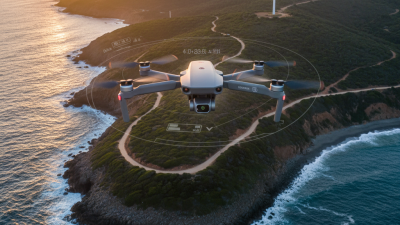
Choosing an autonomous security drone is not simply a technology purchase. It is a risk-management decision shaped by site size, climate, staffing, privacy, and local aviation requirements. Global buyers need evidence beyond impressive flight footage. A useful platform should detect movement, verify alerts, record clear images, and return safely when battery levels fall. It should also support trained human oversight.
Dr. Missy Cummings, a leading researcher in autonomous systems, has stated, “Autonomy is not about replacing humans; it is about augmenting human capabilities.” That principle matters in real facilities. A drone may patrol a warehouse perimeter at night, inspect a fence after heavy rain, or send an alert when a vehicle stops near a restricted gate. Security staff still need to review context and make responsible decisions.
This guide examines ten autonomous security drone options for global buyers. It considers endurance, charging systems, navigation, camera performance, obstacle avoidance, weather resistance, software integration, maintenance, and support quality. It also asks harder questions. Can the system operate when connectivity becomes unstable? Are false alarms manageable? Can operators understand why an alert was triggered?
No platform is perfect.
Some systems promise more than they deliver in crowded environments or poor weather. Buyers should request demonstrations, service terms, training details, and independent performance evidence. They should also confirm that deployment respects privacy, safety, and applicable regulations. The strongest choice is rarely the most futuristic model. It is the one that performs consistently, explains its limits, and fits the organisation’s real security workflow.
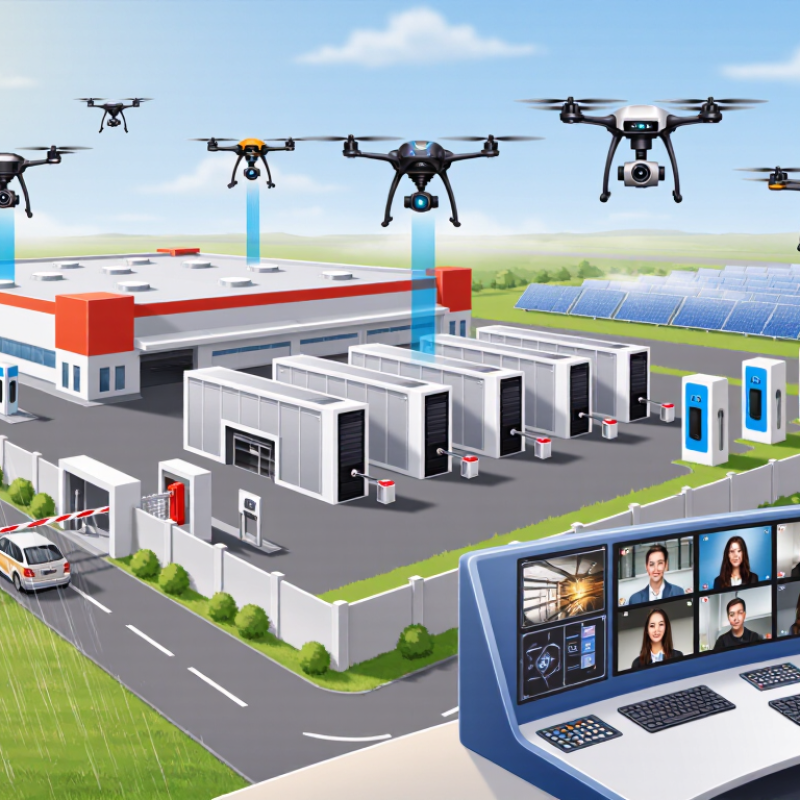
Autonomous security drones are unmanned aircraft that sense surroundings, plan routes, and perform missions with limited human control. They are not simply flying cameras.
Their core systems combine GNSS, visual-inertial navigation, obstacle detection, and edge-based artificial intelligence. Thermal and optical sensors can identify movement, damaged fencing, smoke, or heat signatures in poor visibility. Docking stations support battery charging, health checks, and scheduled deployment.
The function is practical. A drone can patrol a warehouse perimeter, verify an alarm, monitor a remote facility, or send live evidence to a control room. Geofencing and encrypted communications help reduce operational risk. Human approval should remain available for uncertain events. False alarms still happen.
According to Fortune Business Insights, the global drone market was valued at 30.61 billion dollars in 2022 and may reach 55.68 billion dollars by 2030. MarketsandMarkets also forecasts strong expansion in commercial drone applications, although its estimates use different market boundaries. That difference deserves attention.
Buyers should compare sensor accuracy, weather resistance, flight endurance, cybersecurity controls, and local aviation requirements rather than relying on headline rankings. A reliable trial should measure detection rates, missed events, response time, and data retention under real site conditions.
Sensor performance can change near reflective buildings, heavy rain, or crowded industrial areas. Autonomy is improving, but supervision, maintenance, and transparent incident records still determine whether the system performs responsibly.
Choosing among the top ten autonomous security drones requires more than comparing flight time. Define the mission first. A coastal facility may need salt-resistant housing, thermal imaging, and stable operation in strong winds. A warehouse may value obstacle avoidance, quiet flight, and accurate indoor positioning. Construction sites need durable frames, clear night vision, and simple charging routines. Requirements change by location.
Evaluate sensor quality through real operating conditions, not brochure numbers. Test recognition at dawn, during rain, and near reflective surfaces. Check whether the drone records useful evidence without collecting unnecessary personal data. Confirm encrypted communication, access controls, and secure software updates. Local aviation, privacy, and workplace rules must guide deployment. Legal review is not an optional step.
Tips: Ask for a supervised field trial before purchase. Measure response time, landing accuracy, battery replacement, and false alerts. Train operators for lost-signal events and manual recovery. A drone that flies perfectly in a demo may struggle beside cranes or glass walls. We have seen specifications hide practical weaknesses, especially around wind limits and charging delays. That is worth questioning. Also review maintenance support, spare parts, warranty terms, and data storage locations. Global buyers should compare the full operating cost, not only the initial price. Human oversight remains essential, even when autonomous features appear reliable.
Top 10 Autonomous Security Drones for Global Buyers
Autonomous security drones now fall into several practical categories. Docked aerial units support scheduled perimeter patrols, rapid deployment, and automatic battery charging. Tethered systems provide continuous overwatch near facilities, ports, and remote infrastructure. Mobile patrol drones add route flexibility across large sites, while indoor micro-drones inspect warehouses, corridors, and restricted-access areas.
Representative capabilities include thermal imaging, low-light cameras, obstacle avoidance, geofencing, and edge-based video analytics. Some platforms combine GNSS with visual navigation when satellite signals weaken. Others connect with alarms, access-control systems, and centralized command software. According to MarketsandMarkets, the global drone market could grow from about US$30.6 billion in 2022 to US$55.8 billion by 2030. That broad forecast includes commercial and public-sector applications, not security alone.
Performance depends on the environment. A thermal sensor can reveal heat loss, but rain, reflective surfaces, and dense vegetation may reduce accuracy. Battery endurance also changes sharply in wind or cold weather. Drone Industry Insights continues to identify autonomy, automation, and data services as major commercial growth drivers. Buyers should test detection rates, false alarms, recovery behavior, and human review procedures before deployment. The overlooked detail is maintenance. Dusty landing pads, weak network coverage, and outdated maps can quietly undermine an impressive system. Human oversight remains necessary.
Top 10 Autonomous Security Drones for Global Buyers
Autonomous security drones differ most in navigation, surveillance, automation, and deployment. The strongest ten systems usually combine GPS, visual positioning, and obstacle sensing. GPS supports open sites, while visual navigation helps near buildings or covered areas. Some drones also use radar or thermal sensors for low-light inspection. Wind, rain, dust, and tall structures can still reduce accuracy.
Surveillance quality depends on more than camera resolution. A useful system provides stable zoom, thermal imaging, secure data transmission, and clear event records. Some models identify movement, unusual heat patterns, or open gates. Human operators should verify alerts before taking action. False alarms remain common around trees, shadows, birds, and reflective surfaces. That weakness deserves honest testing.
Automation separates basic aircraft from practical security tools. Automated charging stations can support repeated patrols across warehouses, farms, ports, and utility sites. Route scheduling, geofencing, health checks, and automatic return features reduce operator workload. Deployment also depends on site mapping, staff training, maintenance access, and local aviation requirements. Indoor drones may need different sensors than outdoor systems. No platform is perfect. A short pilot program often reveals hidden limits, especially weak network coverage, slow charging, or confusing control software.
Key differences in navigation, surveillance, automation, and deployment
The chart compares common autonomous security-drone categories on a 1–5 capability index. Scores reflect typical category-level characteristics: navigation autonomy, sensor and surveillance suitability, workflow automation, and deployment readiness. Actual performance varies with payload, regulations, weather, communications, and site infrastructure.
Choosing among the top 10 autonomous security drones requires more than comparing flight time. Global buyers must check aviation approval, remote identification, privacy rules, and data-storage requirements. In the United States, Remote ID obligations affect many unmanned aircraft operations. In Europe, buyers should examine EASA rules and local U-space restrictions. Permission for beyond-visual-line-of-sight flights still varies widely.
Market evidence supports careful evaluation. MarketsandMarkets estimated the global drone services market at about USD 30.6 billion in 2022, with strong growth projected through 2027. Grand View Research also reported expanding commercial drone adoption, driven by inspection, surveillance, and infrastructure protection. These figures show demand, not guaranteed returns. A drone may reduce patrol time, yet integration, training, insurance, and maintenance can exceed the purchase price. That is easy to underestimate.
Tips: Request documented flight logs, cybersecurity controls, weather limits, and recovery procedures. Test a unit beside a warehouse, not only in a showroom. Compare battery replacement cycles and operator workload. Ask whether recorded video stays within the approved jurisdiction. A clear audit trail matters. So does human oversight. Autonomous features should support trained personnel, rather than replace responsible decisions. One practical warning remains: international compliance is rarely permanent. Rules change, and a technically excellent drone can become difficult to operate after one regulatory update.