
ZenaDrone Homepage

What Are the Top 10 Types of Quartzite?

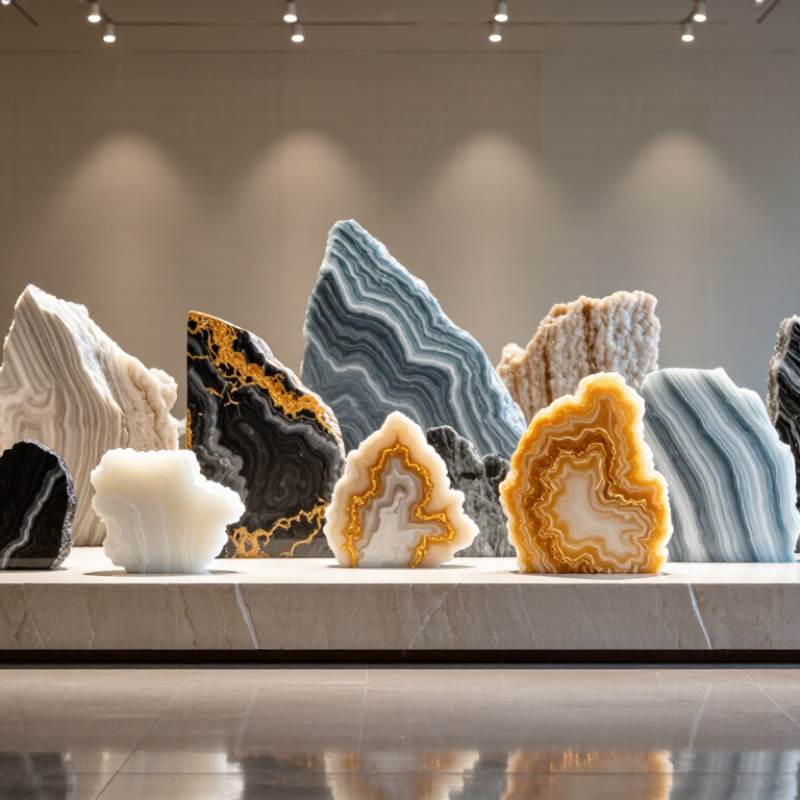
Choosing the top 10 types of quartzite requires more than comparing colors and showroom names. Geological composition, durability, porosity, and market labeling all matter. Some slabs display soft ivory movement, while others carry charcoal veins, golden clouds, or blue-gray waves. Their polished surfaces may look similar to marble, yet their performance can differ significantly.

Geologist Steven Earle describes quartzite as “a metamorphic rock made almost entirely of quartz.” This definition offers a useful starting point. Genuine quartzite forms when quartz-rich sandstone changes under intense heat and pressure. However, the stone industry sometimes uses “quartzite” loosely. Super White, for example, may be dolomitic marble rather than true quartzite. Names such as Taj Mahal, Patagonia, Macaubas, and Sea Pearl can also vary between suppliers and quarries.

That uncertainty deserves attention.

This guide examines ten widely recognized quartzite varieties through appearance, geological character, practical performance, and common applications. It will consider how each stone behaves on kitchen islands, bathroom walls, backsplashes, and outdoor surfaces. It will also explain why hardness alone does not guarantee stain resistance or effortless maintenance. A beautiful slab can still contain fissures, resin repairs, or uneven mineral zones.

The ranking is not absolute. Personal taste, fabrication quality, quarry source, and installation conditions can change the result. Readers should request a recent slab sample, technical data, and independent testing when possible. Even experienced buyers can misjudge a dramatic surface under showroom lighting. That is an important limitation, not a minor detail.
What Are the Top 10 Types of Quartzite?

What Quartzite Is and How Its Main Types Are Classified

What Are the Top 10 Types of Quartzite?

Quartzite is a hard metamorphic rock formed when quartz-rich sandstone recrystallizes under heat and pressure. Its main types are classified by mineral content, texture, fabric, and geological origin. The ten commonly discussed varieties include pure quartzite, orthoquartzite, metaquartzite, ferruginous quartzite, micaceous quartzite, feldspathic quartzite, graphitic quartzite, calcareous quartzite, foliated quartzite, and conglomeratic quartzite.

Pure quartzite contains mostly recrystallized quartz and usually shows a clean, glassy surface. Orthoquartzite retains sedimentary features, while metaquartzite develops stronger metamorphic textures. Iron minerals create red or golden ferruginous tones. Mica can produce fine reflective layers, and feldspar adds a softer, cloudy appearance. Graphite may create dark streaks. Calcareous varieties contain carbonate minerals and need closer acid testing. Foliated quartzite shows directional layering; conglomeratic quartzite preserves rounded pebble structures.

The Natural Stone Institute describes quartzite as a quartz-dominant stone whose performance depends on mineral composition and structure. ASTM C616/C616M also evaluates quartz-based dimension stone through properties such as absorption, density, and strength. These tests matter because two slabs can look similar but react differently to water or scratching. An Allied Market Research report valued the global natural stone market at about $33.4 billion in 2022 and projected continued growth through 2032. That demand encourages clearer stone identification. The classification is useful, but imperfect. Field names often overlap. A trained petrographic examination remains safer than color alone.

The Top 10 Quartzite Types by Color, Texture, and Geological Origin

What Are the Top 10 Types of Quartzite?
The Top 10 Quartzite Types by Color, Texture, and Geological Origin

Quartzite begins as sandstone and changes under intense heat and pressure. Its main mineral is quartz, but minor minerals create striking differences. The ranking below is practical, not absolute. Natural variation makes every slab slightly different.

White quartzite is usually fine-grained and bright. Gray quartzite often shows a soft, sugary texture. Black quartzite may contain graphite, biotite, or iron-rich minerals. Green varieties commonly reflect chlorite or amphibole. Pink quartzite gains color from feldspar or iron compounds. Gold quartzite often displays iron-oxide staining. Blue quartzite can contain dumortierite or other uncommon minerals. Brown quartzite usually carries iron and weathered mineral bands. Red quartzite receives stronger iron-oxide coloration. Multicolor quartzite combines veins, brecciation, and several mineral phases.

Geologically, these stones may be massive, foliated, layered, or brecciated. A glassy surface suggests strong recrystallization, while visible grains reveal the original sandstone.

The U.S. Geological Survey’s Mineral Commodity Summaries 2024 places quartzite within broader silica and stone categories, rather than ranking countertop colors. That limitation matters. Market popularity is not geological proof. ASTM C616/C616M also evaluates quartz-based dimension stone through properties such as absorption, density, and strength, not appearance alone.

Installers should request test data, inspect a full slab, and check for resin-filled fractures. Color can mislead. A dramatic sample may perform differently after cutting, sealing, and daily use.

Distinctive Features and Common Uses of Each Quartzite Type

What Are the Top 10 Types of Quartzite?

Quartzite is best understood through both geology and appearance. Commercial names vary, so these ten types describe common visual categories rather than strict scientific divisions. Pure white quartzite has a clean, bright surface and suits kitchen counters, bathroom walls, and minimalist interiors. Gray quartzite offers a cooler, quieter appearance for floors, islands, and fireplace surrounds. Beige quartzite brings warmth to traditional kitchens and hospitality spaces. Green quartzite often contains mossy or forest-like movement, making it suitable for statement walls and vanities. Blue quartzite creates a dramatic focal point in islands and feature panels. It can look different under daylight.

Pink quartzite usually shows soft rose tones and works well in bedrooms, bathrooms, and decorative furniture. Red quartzite provides stronger energy for reception desks, accent walls, and smaller surfaces. Yellow or golden quartzite adds sunlight-like warmth to backsplashes and dining areas. Black quartzite delivers a refined, high-contrast look for counters and fireplace surrounds, although dust and water marks may appear easily. Veined or multicolored quartzite combines several tones, often with sweeping mineral patterns, and is effective on book-matched walls or large islands.

Each type has practical limits. A qualified fabricator should inspect slabs for fissures, resin repairs, thickness, and water absorption before cutting. Quartzite is hard, but it is not indestructible. Acidic cleaners may dull some finishes, and poorly supported overhangs can crack. Color names can mislead. I would always view the actual slab, not rely only on a small sample.

What Are the Top 10 Types of Quartzite? — Distinctive Features and Common Uses of Each Quartzite Type
No. Quartzite Type Distinctive Features Typical Appearance Common Uses Key Consideration
1 Orthoquartzite A very mature, quartz-rich sedimentary rock formed from sandstone; quartz grains are commonly well rounded and tightly cemented. Usually white, gray, tan, or pale brown with a relatively uniform granular texture. Building stone, paving, crushed aggregate, road base, and architectural masonry. Generally hard and durable, but appearance and performance can vary with cement, porosity, and weathering.
2 Metaquartzite Quartz-rich sandstone transformed by heat and pressure, producing tightly interlocking and recrystallized quartz grains. Often white, gray, silver, or subtly banded, with a crystalline sparkle on broken surfaces. Countertops, wall cladding, flooring, stairs, monuments, and high-wear architectural surfaces. Its strength is commonly high, although mica-rich layers may reduce resistance to splitting or abrasion.
3 Pure Quartzite Contains very little material other than quartz, giving it a compact structure and strong resistance to scratching. Commonly bright white, cream, light gray, or translucent at thin edges. Decorative stone, engineered aggregate, silica-rich industrial material, flooring, and interior cladding. Its low impurity content creates a clean appearance but may also make staining or surface defects more visible.
4 Micaceous Quartzite Contains visible mica minerals such as muscovite or biotite, which may create foliation and a reflective surface. Silver, gray, beige, or greenish tones with glittering flakes and natural layering. Feature walls, fireplaces, backsplashes, split-face cladding, garden walls, and decorative slabs. Mica-rich planes can make the stone easier to split but may reduce suitability for heavy-traffic floors.
5 Ferruginous Quartzite Contains iron-bearing minerals or iron oxides, commonly formed through weathering or mineral alteration. Red, rust, orange, yellow, brown, or burgundy with streaks, bands, or mottled patterns. Flagstone, exterior paving, retaining walls, landscape features, veneers, and rustic architectural work. Iron-rich areas may weather or stain; sealing and suitability testing are recommended for wet or polished applications.
6 Garnet Quartzite Includes garnet crystals formed during metamorphism, often embedded in a quartz-rich matrix. Gray, pink, reddish, or brown with scattered dark red to deep brown garnet spots. Decorative wall panels, fireplace surrounds, accent slabs, sculptures, and feature flooring. Large garnet crystals can create a textured surface and may require careful finishing and edge treatment.
7 Green Quartzite Gets its color from minerals such as chlorite, epidote, actinolite, or other green metamorphic components. Pale sage, olive, forest green, or green-gray, sometimes with white or dark veining. Kitchen and bathroom surfaces, wall cladding, paving, landscaping, shower walls, and decorative interiors. Mineral content differs from one deposit to another, so absorption, etching, and finish performance should be tested.
8 Blue Quartzite Blue coloration may be associated with minerals such as dumortierite, amphiboles, or other trace components within the quartz-rich rock. Blue-gray, steel blue, or muted blue with white, gray, or darker mineral veining. Statement countertops, backsplashes, fireplace surrounds, wall panels, and specialty architectural accents. Color consistency can vary considerably; samples should be inspected under the intended lighting.
9 Conglomeratic Quartzite A metamorphosed quartz-rich conglomerate with rounded pebbles or clasts cemented within a quartz-rich matrix. Distinctive pebble-like patterns in gray, white, tan, pink, or multicolored tones. Feature walls, fireplace surrounds, landscape masonry, public art, and dramatic interior accents. The strength and polishability depend on how securely the individual clasts are bonded to the matrix.
10 Schistose Quartzite Quartzite with a pronounced schistosity caused by aligned mica or other platy minerals, creating preferred splitting planes. Layered gray, silver, brown, green, or gold surfaces with a naturally cleft texture. Dry-stack walls, outdoor paths, garden steps, rustic cladding, flagstone, and textured landscape features. Its attractive cleft surface may be uneven; thickness, slip resistance, and freeze-thaw performance should be checked before installation.
Note: Quartzite names may describe geological composition, metamorphic texture, or visible color. Commercial stone classifications can overlap, so laboratory testing and project-specific performance checks are advisable before selecting a material.

How to Compare Quartzite Types for Design, Construction, and Durability

Quartzite varies widely in color, grain, and performance. Common design categories include white, gray, beige, brown, black, green, blue, pink, yellow, and veined quartzite. Popular examples include Taj Mahal, Calacatta-style, White Macaubas, Patagonia, and Super White. However, names can be inconsistent. Super White is often marketed as quartzite, although some slabs are dolomitic marble. Confirm the geology before specifying it.

For interior design, compare background color, movement, slab size, and finish. White and beige quartzites brighten kitchens and suit restrained interiors. Green, blue, and Patagonia-style stones create stronger focal points. Veining may look dramatic on an island but distracting across several walls. Honed surfaces reduce glare, while polished finishes reveal deeper color. Small samples can mislead.

Construction decisions require test data, not attractive photographs. Ask for water absorption, density, flexural strength, abrasion resistance, and acid-sensitivity results.

Low absorption supports bathroom and exterior use, but installation still needs correct sealing and drainage. Dark stones can show scratches and fingerprints. Softer or fissured varieties may need reinforced edges and careful transport.

Kitchen testing should include lemon juice, oil, heat, and abrasive contact. It is not perfect, but real samples expose weaknesses.

For outdoor projects, check freeze-thaw performance and surface stability. Local climate matters more than a sales label.

Factors to Consider When Selecting the Right Quartzite Type

What Are the Top 10 Types of Quartzite?

Quartzite appears in white, gray, beige, green, blue, pink, gold, black, veined, and translucent varieties. The best choice depends on use, lighting, and maintenance expectations. Color names can mislead me, so I would inspect a full slab rather than a small sample. Natural movement often changes dramatically across one surface.

Factors to Consider When Selecting the Right Quartzite Type

Start with performance. Quartzite is generally hard, but each slab can differ in porosity and mineral content. Ask for water-absorption results, care instructions, and independent stone testing when available. A simple sample test helps. Place a few drops of water on an unfinished area. Darkening may indicate absorption, although this test is not conclusive. A professional fabricator should also check the slab for fissures, weak edges, and repair resin.

Consider the room’s practical demands. A pale, heavily veined stone can brighten a kitchen, but stains may be easier to notice. Dark quartzite can create drama, while dust and fingerprints may show more clearly. Honed finishes feel softer and hide scratches better, yet polished surfaces usually resist daily staining more effectively. I would compare the stone under morning and evening light. I might also reconsider a bold pattern after viewing the planned seams. Bookmatching can waste material, and replacement slabs may never match perfectly. For bathrooms, confirm the supplier’s sealing schedule and test the finished installation before regular use.

What Are the Top 10 Types of Quartzite?

Indicative quartz-content midpoints for common geological and textural quartzite types. Higher quartz content generally indicates a harder, more chemically stable stone, but porosity, veining, iron content, finish, and test results should also be considered before selection.

Quartzite is typically composed predominantly of recrystallized quartz, although its exact mineral composition varies by geological formation. The percentages shown are indicative values rather than universal specifications. For countertops, flooring, or exterior use, compare absorption, abrasion resistance, stain resistance, and available laboratory test data for the specific slab.

Article Source:

Scroll to Top