Top 10 Automatic Glass Cutting Machines for Global Buyers
Buying a glass cutting system is not simply a search for the fastest machine. It is a decision about accuracy, uptime, safety, software, and long-term support. For global buyers, the right choice must match glass type, sheet size, production volume, and local service conditions.
Automatic Glass Cutting Machines can process float, coated, laminated, or insulating glass, but performance varies sharply between models. A machine that cuts 10 millimeter clear glass cleanly may struggle with low-E coatings or laminated sheets. Small details matter. Watch the cutting bridge, wheel pressure, loading table, breakout system, and optimization software. A poor pressure setting can leave chipped edges, wasted sheets, and expensive rework.
Dr. William C. LaCourse, a respected glass science educator, offers a useful principle: “Precision begins with understanding the glass.” That idea should guide every comparison in this guide. We examine cutting accuracy, material compatibility, automation depth, maintenance access, operator training, energy use, and technical support. We also consider practical evidence, such as cutting stability during long shifts and the quality of the first sheet after machine startup.
This is not a perfect ranking. Factory layouts differ. Budgets change. Service response can matter more than a glossy specification sheet. Some buyers may prefer a simpler machine with familiar controls, while others need robotic loading and production tracking. The top ten models below are therefore compared as working tools, not showroom promises. Their strengths, limits, and suitable applications are presented clearly for manufacturers, fabricators, and international purchasing teams.
What Automatic Glass Cutting Machines Are and How They Work
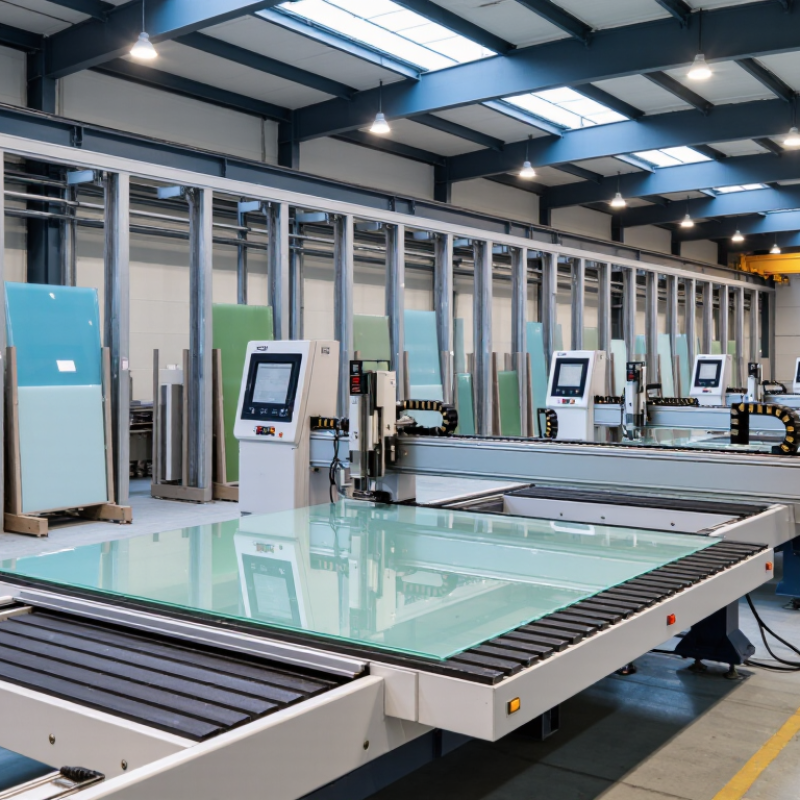
Automatic glass cutting machines use software, sensors, and motorized tools to process flat glass with limited manual handling. A typical line includes a loading table, conveyor, vision scanner, cutting bridge, and breakout station. The scanner reads sheet dimensions and surface defects. Optimization software then arranges customer shapes to reduce waste.
The cutting head scores the glass surface with a controlled wheel or carbide tool. It does not cut through the entire sheet. A breakout system applies force along the score line, creating clean panels. Thickness, coating, temperature, and cutting pressure affect the result. According to Grand View Research’s 2024 flat glass market report, the global market reached about USD 145.8 billion in 2023. That scale increases demand for repeatable, high-speed processing. Still, automation is not magic. Poor glass quality can defeat excellent software.
Tips: Check the machine’s supported thickness range. Confirm edge-tolerance data. Ask for sample-cut records. Inspect oil delivery, scoring pressure, and dust control. The IEA reports that buildings account for roughly 30% of global energy demand, increasing interest in energy-efficient glazing. Buyers should therefore verify whether the system handles coated or low-emissivity glass safely. A rushed selection can create hidden losses through breakage, downtime, and oversized offcuts. Even experienced operators sometimes underestimate calibration needs. Real production trials remain more convincing than a polished brochure.
Top 10 Automatic Glass Cutting Machines for Global Buyers
Automatic glass cutting machines use CNC-controlled bridges, scoring wheels, sensors, and optimization software to measure glass, calculate the best cutting layout, score the surface, and support accurate breakout with minimal material waste.
The chart compares typical rated cutting speeds for ten common automatic machine configurations. Values are representative industry specification levels in meters per minute; actual performance depends on glass thickness, coating, sheet size, cutting pattern, and production-line settings.
Key Features for Comparing the Top 10 Glass Cutting Machines
When comparing the top 10 automatic glass cutting machines, start with measurable cutting performance. Check positional accuracy, repeatability, and edge quality across common glass thicknesses. A machine may claim high speed, yet slow acceleration can reduce real output. Ask for sample cuts, not only brochure figures. Measure a 1,000 mm line with a calibrated rule. Inspect chips under bright light. Small flaws matter.
Control software deserves equal attention. Look for clear nesting tools, DXF compatibility, automatic shape recognition, and quick recovery after power interruptions. Operators should adjust layouts without hidden licensing barriers. Test the interface with gloves and under workshop lighting. Also compare table dimensions, loading height, vacuum stability, and cutting head movement. A larger table is not always better. It may require more floor space and energy.
Safety and ownership costs often separate strong options. Verify guarding, emergency stops, sensor coverage, noise levels, and maintenance intervals. Ask whether blades, belts, filters, and vacuum parts are locally available. Reliable technical support should provide response times and training records. Do not trust a perfect demonstration. Request a production trial with coated, laminated, and thin glass. Results can change with temperature, dust, and operator habits. That uncertainty deserves attention.
Top 10 Automatic Glass Cutting Machines for Global Buyers
Top 10 Automatic Glass Cutting Machines for Global Buyers
Global buyers need more than cutting speed. They need stable accuracy, safe operation, and dependable service. The best automatic glass cutting machines combine digital layouts, automatic positioning, and controlled scoring pressure. In real workshops, a clean cut often depends on table leveling and blade maintenance.
This selection covers ten useful machine types: CNC flat glass cutters, laminated glass cutters, low-E glass cutters, insulating glass cutters, shaped glass cutters, jumbo-sheet cutters, compact workshop cutters, loading-table systems, edge-sealing integrated lines, and robotic cutting cells. CNC flat cutters suit general production. Laminated systems require reliable film handling. Low-E models need coating removal control. Shaped cutters help architectural projects. Jumbo machines improve sheet utilization, but they demand more floor space.
I have seen operators lose time because software settings were ignored. That mistake is common. Buyers should check cutting tolerance, table dimensions, maximum glass thickness, dust control, and emergency-stop access. Ask for test cuts using your own glass, not only sample material. Confirm training, spare-part delivery, electrical compatibility, and language support before payment. A machine may promise high output, yet poor loading habits can reduce actual productivity. Manual inspection still matters, especially around corners, small edges, and coated surfaces. The most reliable choice is the machine that matches daily volume, workforce skills, building space, and local maintenance capability.
How to Match Machine Types with Glass Processing Requirements
Choosing among the top 10 automatic glass cutting machines starts with the glass, not the machine list. Standard float glass usually suits an automated cutting table with programmed scoring and controlled breaking. For laminated glass, buyers need a system designed for film separation and clean cutting. Low-E glass may require specialized handling to protect its coated surface. Curved or irregular shapes demand CNC movement, stronger software control, and accurate positioning.
Match the machine’s working size to your largest regular sheet. A 3,000 × 6,000 mm table offers flexibility, but it also needs substantial floor space. Check the supported thickness range, cutting tolerance, loading method, and daily production target. A small fabricator may gain more from compact automation than from a high-speed industrial line. Bigger is not always better.
In practical installations, dust control and operator training affect results as much as cutting speed. Ask for test cuts using your actual glass, especially when processing coated or laminated materials. Review maintenance records, spare-part access, software updates, and safety documentation before purchase. Claims about precision should include measurable tolerances. Even experienced buyers sometimes overlook table leveling or vacuum performance. That mistake can create chipped edges and wasted sheets. Machine selection is not perfect on paper. Real production trials often reveal requirements that specifications miss.
Global Purchasing Factors: Price, Support, Safety, and Compliance
Global Purchasing Factors: Price, Support, Safety, and Compliance
Price should be judged through total cost, not the quotation alone. A 2024 Grand View Research report valued the global flat glass market at over USD 130 billion. This scale increases pressure for speed, accuracy, and stable output. Buyers should compare cutting capacity, software, blade life, energy use, installation, and spare parts. A cheaper machine may become expensive when one sensor stops production. Request a five-year cost estimate. It exposes uncomfortable gaps.
Technical support can protect production more effectively than a small discount. Ask about remote diagnostics, response times, operator training, and local service coverage. Spare parts should have clear delivery commitments. Practical tests matter too. Request sample cutting with your glass thickness, coating, and shape requirements. A perfect factory demonstration may not represent daily conditions. I would not trust promises without records, references, and written service terms.
Safety and compliance require documented evidence. ISO 12100 recommends formal machinery risk assessment, while ISO 13849-1 addresses safety-related control systems. Guards, emergency stops, interlocks, light barriers, and safe maintenance access should be inspected physically. The International Labour Organization estimated 2.93 million work-related deaths worldwide in 2021. That figure makes safety more than a purchasing checkbox. Confirm electrical compatibility, training files, conformity documents, and applicable local requirements. Compliance paperwork can still be incomplete. Ask an independent engineer to review it before payment.