How to Choose the Best Search and Rescue Drone for Your Needs?
In recent years, the use of search and rescue drones has transformed emergency response operations. According to a report by the American Society for Testing and Materials, drones can significantly shorten response times during critical rescue missions. Their ability to cover large areas quickly makes them invaluable in locating missing persons or assessing disaster-stricken regions.
However, choosing the best search and rescue drone requires careful consideration. Factors such as flight time, camera quality, and payload capacity play crucial roles in performance. A drone with insufficient battery life may fail to complete its mission. Moreover, the integration of thermal imaging can enhance visibility in low-light conditions.
Not all drones are created equal, and selecting the right one hinges on specific mission requirements. While many options are available, some may lack the essential features for effective rescue operations. Understanding these needs and limitations is vital in making an informed decision. The right drone can mean the difference between success and failure in critical situations.
Understanding the Role of Drones in Search and Rescue Operations
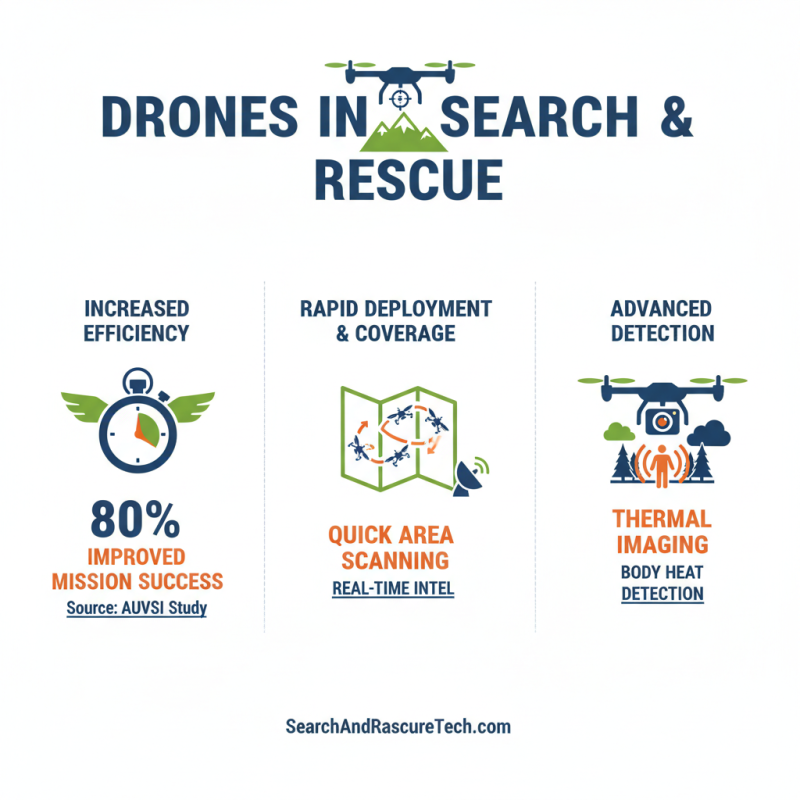
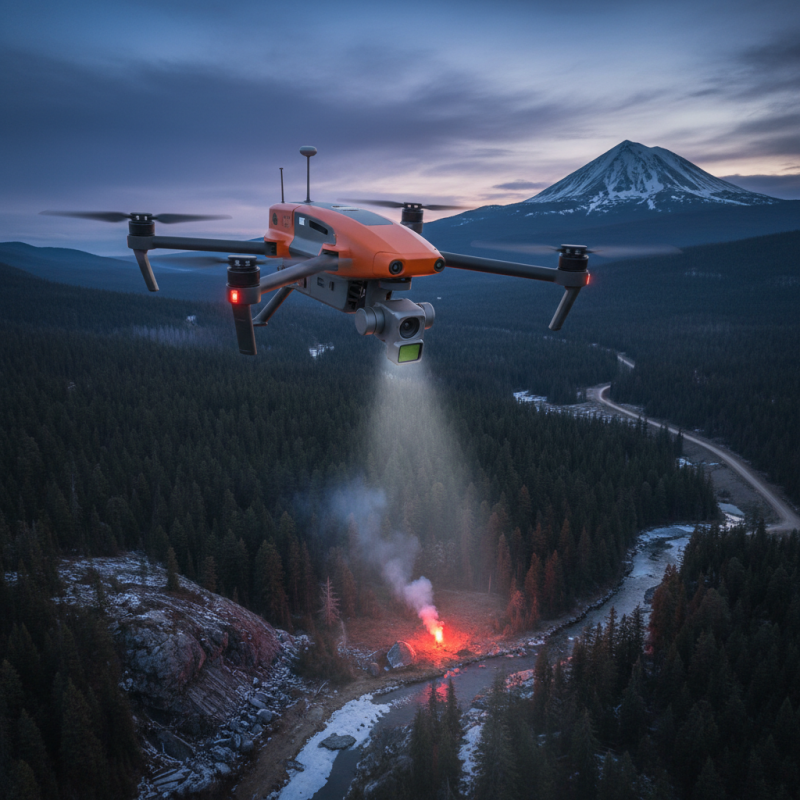
Drones play a crucial role in search and rescue operations, offering unique capabilities that enhance efficiency and safety. According to a study by the Association for Unmanned Vehicle Systems International, nearly 80% of responders report improved mission success rates when utilizing drones. Their ability to cover large areas quickly provides teams with critical information in real time. Drones equipped with thermal imaging technology can detect body heat, even in dense forests or harsh weather conditions.
Despite these advancements, challenges remain. Operators must ensure that drone flights comply with local regulations, balancing innovation with safety. Data from the Federal Aviation Administration indicates that more than 30% of drone operators face legal restrictions that limit their deployment in emergency scenarios. Training personnel to effectively use this technology is another hurdle, as proper expertise directly influences mission effectiveness.
While the potential of drones is evident, their integration into traditional search and rescue practices is ongoing. Some teams still rely heavily on ground-based methods. This can lead to slower response times. As technology evolves, addressing these gaps through continued education and community engagement is vital. Embracing this shift can ultimately save more lives.
Key Factors to Consider When Selecting a Search and Rescue Drone
Selecting the right search and rescue drone requires careful consideration of several key factors. One crucial aspect is flight time. According to a 2023 report by the Drone Industry Association, many effective models offer flight times between 20 to 40 minutes. Longer flights extend operational capabilities in emergencies. However, the balance between battery size and weight is often a point of contention that needs careful analysis.
Payload capacity is another vital factor. Drones designed for search and rescue missions must carry essential equipment. This can include thermal cameras and GPS trackers. A 2022 case study highlighted that drones equipped with thermal imaging significantly increased search efficiency by 30%. Yet, excessive payload can compromise maneuverability. It is essential to evaluate the right balance.
Weather resistance is equally significant. Many drones perform poorly in adverse conditions. The best models boast IP ratings that confirm their durability against water and dust infiltration. However, not all manufacturers provide clear data on their products' limits. Users should seek independent reviews and real-world testing results. Making the right choice involves gathering reliable information while being mindful of potential shortcomings in product claims.
Comparing Drone Features for Optimal Search and Rescue Performance
When selecting a search and rescue drone, understanding its features is crucial. Not all drones are created equal. Some prioritize battery life, while others emphasize camera quality. A longer flight time allows for extended missions. High-resolution cameras can capture vital details from high altitudes. Considering your specific needs helps in making the right choice.
Payload capacity is another key feature. Some missions may require additional equipment, such as thermal cameras or sensors. Ensuring compatibility with necessary tools is essential. Additionally, ease of use plays a role. Drones with intuitive controls can reduce training time. This allows teams to act quickly in emergencies.
Weather resistance is important too. Drones exposed to harsh conditions may fail. Ascertain their durability against wind and rain. Lastly, software capabilities matter. Advanced mapping and navigation systems can enhance efficiency. Ensuring your team is familiar with the software can improve operational performance.
Budgeting for Your Search and Rescue Drone Investment
Budgeting plays a crucial role in selecting the right search and rescue drone. A solid investment requires detailed financial planning. According to industry reports, a basic drone suited for search and rescue typically ranges between $1,500 and $5,000. More advanced models with enhanced capabilities may cost upwards of $10,000. The pricing often correlates with the drone's features and payload capacity.
Consider additional costs such as accessories, maintenance, and potential upgrades. Professional-grade drones may require specialized training for operators. This training can add to the initial expenditure, yet it enhances operational effectiveness in emergencies. Ongoing costs, like software updates and repairs, are also vital. A revealing statistic indicates 28% of organizations underestimate these ongoing expenses.
Evaluating your specific needs is essential. Some organizations may benefit from a basic model, while others require high-resolution cameras and thermal imaging. Feedback from existing users shows mixed experiences with budget drones. Some report satisfactory performance, while others argue they compromise on reliability during critical operations. Accurate assessment of operational needs can aid in making informed financial decisions. Aim to strike a balance between budgetary constraints and operational capability.
Evaluating Drone Manufacturers and Model Reliability
When evaluating drone manufacturers, reliability is key. Look for companies with proven track records in search and rescue missions. Check their history for successful deployments, particularly in challenging conditions. Authentic user reviews can also provide insight into a model's performance. Read feedback from professionals who rely on drones for critical tasks, as their experiences often highlight the strengths and weaknesses of specific models.
Consider the robustness of the materials used in drone construction. Drones must withstand harsh environments. High-quality materials ensure durability and longevity, especially for rescues in rugged terrains. Additionally, prioritize manufacturers that offer comprehensive support and maintenance. A reliable warranty can protect your investment. However, don’t overlook the need for ongoing training. Even the best drones require skilled operators to maximize their effectiveness.
Lastly, think critically about your needs. Each operation may call for different capabilities. Do you need thermal imaging? Real-time data transmission? Assess what features are essential for your specific mission. Sometimes, less complex models perform better for particular tasks than high-end options. Remember, the right drone can greatly enhance your search and rescue efforts, but it requires careful consideration and reflection on your immediate requirements.