
ZenaDrone Homepage

2026 Best Circuit Breaker Manufacturers for Global Buyers

Choosing a circuit breaker is rarely just a matter of comparing prices. A unit must match the system voltage, fault current, operating environment, and maintenance plan. For global buyers, the supplier matters too. Reliable documentation, clear product specifications, and responsive technical support can affect a project long after delivery.

This guide to 2026 Best Circuit Breaker Manufacturers for Global Buyers examines manufacturers through practical purchasing criteria. It considers product range, manufacturing capability, quality controls, certifications, and export experience. Buyers can compare options for low-, medium-, and high-voltage applications, while checking details such as rated breaking capacity, enclosure protection, and accessory compatibility. Small details matter.

A polished catalogue is not proof of performance. Request current test reports and confirm that certificates apply to the exact product and market. Ask how the manufacturer handles spare parts, lead times, and technical questions across time zones. These checks take effort. They can prevent expensive surprises.

No single supplier is right for every project. A large manufacturer may offer broad product coverage, while a specialized producer may provide closer support for a defined application. Even careful comparisons have limits: factory capacity and service quality can change, and public information may not tell the full story. Treat this overview as a starting point, then verify each shortlisted option against project requirements and qualified engineering advice.
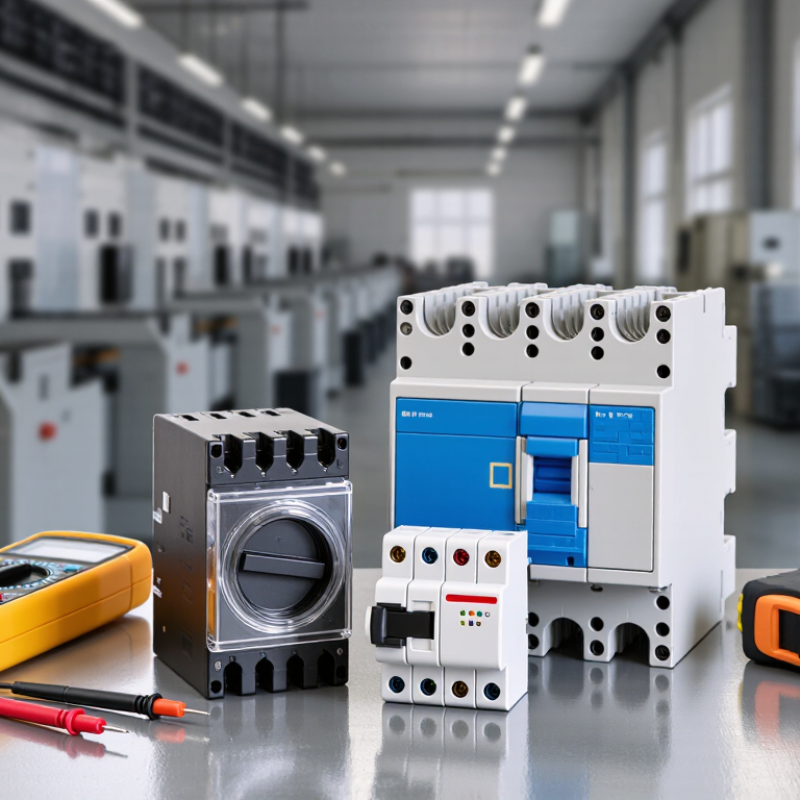
2026 Best Circuit Breaker Manufacturers for Global Buyers

Circuit Breakers: Core Functions, Types, and Applications

Circuit Breakers: Core Functions, Types, and Applications

A circuit breaker interrupts current when a circuit experiences an overload or short circuit. This helps limit heat buildup, equipment damage, and fire risk. Unlike a fuse, many breakers can be reset after the fault is identified and cleared. They do not prevent every electrical hazard, so correct selection and installation still matter.

Common types include miniature circuit breakers for branch circuits, molded-case breakers for larger loads, and air or vacuum breakers for industrial systems. Residual-current devices detect leakage to earth, while combined units can address both leakage and overcurrent. Applications range from homes and commercial buildings to factories, renewable-energy systems, and data centers. Ratings, trip curves, voltage, and fault-current capacity should match the installation. A breaker that fits the panel may still be unsuitable for the load.

Tips: Check the equipment label and circuit drawings before choosing a replacement. Confirm the required interrupting capacity and pole count with a qualified electrical professional. Keep ventilation clear around panels, and investigate repeated trips rather than resetting the breaker again and again. Small details matter. Real installations can differ from the drawings, so verify conditions on site.

How to Evaluate Circuit Breaker Manufacturers in 2026

2026 Best Circuit Breaker Manufacturers for Global Buyers

How to Evaluate Circuit Breaker Manufacturers in 2026

Choosing a circuit breaker manufacturer takes more than comparing prices and product photographs. Start with the application: rated voltage, current, fault level, operating frequency, and installation environment. A breaker for a dusty factory panel may face different demands from one used in a clean commercial building. Details matter.

Ask for test documentation that matches the exact product model and configuration. Check whether ratings, dimensions, and trip characteristics are clearly stated. Confirm which recognized standards apply in your target market, and request traceable test reports rather than broad assurances. Good documentation should be easy to review. If answers keep changing, pause.

Manufacturing consistency also deserves close attention. Ask how incoming materials, assembly steps, and final inspections are controlled. For a practical check, compare sample units with drawings and inspect terminals, labels, and enclosure finish. These small details can reveal gaps. They are not proof on their own. Review warranty terms, spare-part availability, lead times, and technical support for your region, too. A polished brochure cannot replace clear service procedures. Even a thorough evaluation has limits; buyers should verify critical claims independently and revisit requirements when project conditions change.

Circuit Breaker Standards: Maximum Voltage Scope

A standards-based comparison can help global buyers assess whether a manufacturer's product range matches the intended application. IEC 60898-1 covers household and similar AC circuit breakers up to 440 V; IEC 60947-2 covers low-voltage circuit breakers up to 1,000 V AC and 1,500 V DC. These figures describe the standards' scope, not the ratings of any specific product.

Leading Circuit Breaker Manufacturers for Global Buyers

Leading Circuit Breaker Manufacturers for Global Buyers

Global buyers should assess manufacturers by verified performance, not brochure claims. The International Energy Agency’s Electricity 2024 report projects global electricity demand growth of about 3.4% annually through 2026. Expanding networks and heavier industrial loads make dependable interruption capacity, tested coordination, and consistent supply especially important. Ask suppliers for type-test documentation, rated breaking capacity, operating-life data, and clear guidance on installation conditions. Check that product configurations match the voltage, fault level, and environment at the actual site.

Look beyond the device itself. Leading manufacturers typically support traceable quality controls, stable component sourcing, technical documentation, and responsive service across regions. Confirm that the offered breaker meets relevant IEC requirements, such as IEC 60947-2 for low-voltage circuit breakers, where applicable. Request references from comparable installations and clarify spare-parts availability before purchase. No shortlist is perfect; one overlooked auxiliary contact or enclosure detail can delay commissioning. I would also compare delivery promises against documented production capacity, not just sales estimates.

Tips

Provide suppliers with a single-line diagram, expected fault current, ambient temperature, and enclosure details. Request a written compliance matrix and sample test records. Compare total lifecycle support, not only purchase price. Shortcuts can be costly.

Comparing Manufacturer Capabilities, Certifications, and Support

Global buyers comparing circuit breaker manufacturers should look beyond rated current and breaking capacity. Check whether product ranges cover the voltages, fault levels, and installation conditions required at your site. Ask for test reports that match the exact product series, not just a similar model. Clear traceability matters when equipment must be inspected or replaced years later.

Certifications can help verify that products meet relevant market and application requirements, but a certificate alone does not confirm suitability for every project. Review its scope, issuing body, product model, and validity. Also compare factory quality controls, routine testing, and technical documentation. A capable manufacturer should explain selection limits plainly and provide drawings, coordination data, and answers within a practical timeframe. Support quality can vary, even when brochures look equally polished.

Tips: Request a sample datasheet, one recent test report, and a written response-time commitment. Check whether spare parts, troubleshooting, and application guidance are available in your destination market. Keep records of model revisions. Comparisons are rarely perfectly neat; some suppliers may excel in documentation but offer slower local support. That trade-off deserves a close look.

2026 Best Circuit Breaker Manufacturers for Global Buyers - Comparing Manufacturer Capabilities, Certifications, and Support

Comparison Dimension What Buyers Should Check Relevant Standards or Evidence How to Compare Suppliers
Product scope Availability of miniature circuit breakers (MCBs), molded-case circuit breakers (MCCBs), air circuit breakers (ACBs), residual-current devices, and accessories. Product catalogs, technical datasheets, and model-specific installation instructions. Confirm that the supplier offers the required device type, pole configuration, rated current, and accessories for each application.
Applicable product standards Standards declared for the exact breaker model and its intended market. IEC 60898-1 covers circuit-breakers for overcurrent protection in household and similar installations. IEC 60947-2 applies to low-voltage circuit-breakers. UL 489 is a North American standard for molded-case circuit breakers and related devices. Match the standard to the installation and jurisdiction. Check the certificate or listing number in the issuing certification body’s database; do not rely on a general company statement.
Rated voltage and current Declared operational voltage, rated current, frequency, and number of poles. Model-specific nameplate and datasheet; applicable product standard and local electrical code. Compare ratings at the actual system voltage and frequency. Verify derating requirements for ambient temperature, enclosure, and installation conditions.
Interrupting capacity Breaking-capacity ratings and the conditions under which they apply. Datasheet values such as Icn or Icu/Ics, as applicable to the product and standard; test reports or certification records. Compare the rating with the prospective short-circuit current at the installation point. Check that the rating and test conditions correspond to the exact model and configuration.
Trip characteristics and protection functions Available trip curves, thermal-magnetic or electronic trip options, adjustable settings, and protection functions. Time-current curves, trip-unit documentation, and coordination or selectivity data where provided. Request curves and settings for the specific device. Assess coordination with upstream and downstream protective devices rather than comparing curve labels alone.
Environmental and installation suitability Operating temperature range, enclosure compatibility, mounting method, terminal options, and stated environmental limits. Installation manual, datasheet, and applicable enclosure or environmental ratings. Check the complete assembly and operating conditions. An individual breaker rating does not automatically establish the rating of the panel or enclosure.
Certification and traceability Current certificates, product markings, manufacturing-site scope, and model-level traceability. Certificates and listings from recognized certification bodies; production identification and quality-system documentation. Verify scope, validity, factory location, and exact model designation directly with the certification body or its public directory when available.
Quality and change control Documented production controls, inspection procedures, component traceability, and notification of design changes. Quality-system certificates, inspection records, audit information, and written change-control procedures. Ask which site and product families are covered, how nonconforming products are handled, and how buyers are notified of changes affecting certification or performance.
Technical documentation Availability of datasheets, dimensional drawings, wiring diagrams, manuals, and selection or coordination guidance. Current revision-controlled documents for the exact product range. Compare completeness, language availability, revision dates, and consistency between documents, labels, and certificates.
Global delivery and logistics Export experience, lead-time commitments, packaging, shipping terms, and availability of replacement units. Written quotations, delivery schedules, packaging specifications, and shipment records where available. Evaluate delivery performance using the buyer’s own order history or references. Confirm lead times and trade terms for the destination market.
After-sales and warranty support Warranty terms, technical response channels, troubleshooting support, and availability of spare parts. Published warranty documentation, service procedures, and written support commitments. Compare response-time commitments, warranty exclusions, local service coverage, and the process for investigating product failures.
Project and customization support Support for panel builders, OEMs, project documentation, and approved configuration options. Technical application guides, configuration records, and written confirmation of any non-standard requirements. Confirm that proposed configurations remain within the product’s certified scope and that engineering approvals are documented.

Buyer note: Circuit-breaker ratings, certifications, availability, and support vary by model, manufacturing site, and destination market. Verify current, model-specific documentation before purchase; this comparison framework does not rank or endorse any manufacturer.

How to Select a Manufacturer for Your Market and Project

For global buyers, selecting a circuit breaker manufacturer starts with the project, not the product catalogue. Map the installation voltage, fault level, ambient temperature, enclosure, and expected operating cycles. Then check whether the manufacturer can provide test reports, traceable production records, and technical support in your region. A breaker that fits a drawing may still fail the project if its trip settings, accessories, or replacement schedule do not match the site. Small details matter.

Market demand adds pressure. The International Energy Agency’s Electricity 2024 report projected global electricity demand growth averaging 3.4% annually from 2024 to 2026. That trend can increase demand for reliable distribution equipment, but it does not make every supplier suitable. Confirm the applicable product standards and certification route for the destination market; IEC 60947-2 and UL 489, for example, serve different frameworks. Ask for evidence relevant to the exact model and rating, not a general company certificate. Request sample test documentation and clarify lead times, spare parts, and warranty response before placing an order. A low quotation can hide costly gaps. I would also compare how clearly a supplier explains limitations—because a perfect-looking specification sheet deserves a second look.

Scroll to Top